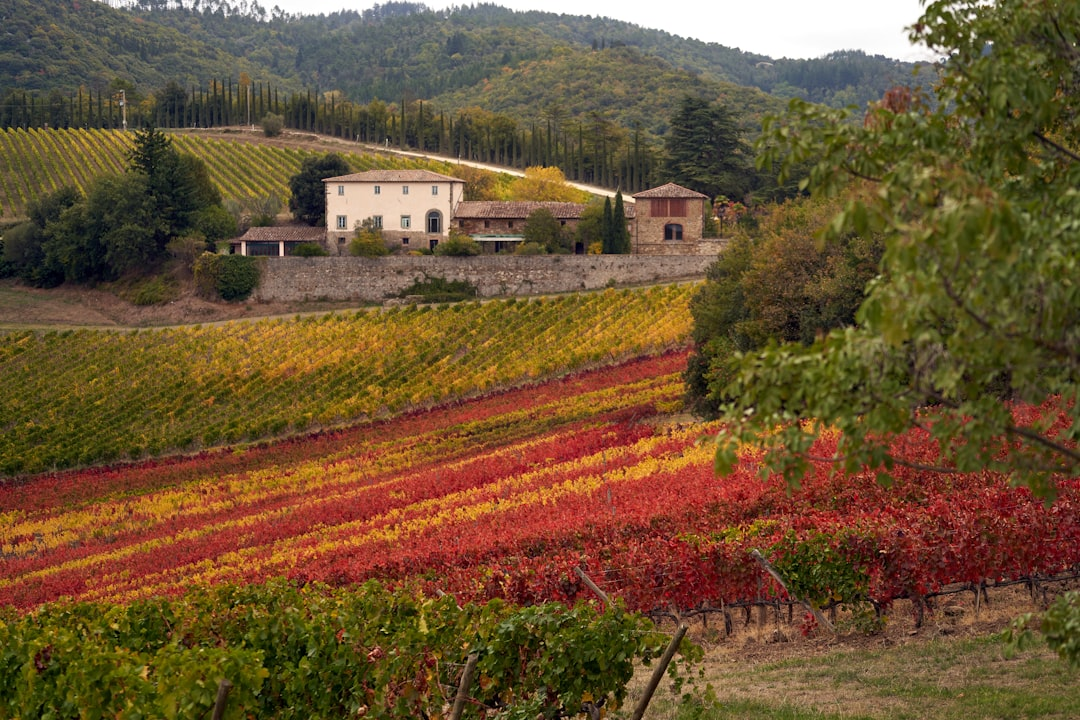

What are Super Tuscans and why do they matter?

I have always been drawn to big reds — the flavours, the punch, the way they unequivocally announce themselves and tell you exactly who they are. These are wines that don’t whisper. They walk into the room, shake your hand firmly, and stay for dinner.
Cabernet Sauvignon and Malbec were my starting points, as they are for many people who spend their early wine years drinking New World. And for a long time, that was plenty. It wasn’t until I returned to England — and found myself with access to a far wider range of European wines — that Italy started to take over. Much like the music of Taylor Swift, you very rarely come across a bad one. Though I’ll admit it took me a while to find Tuscany, and even longer to discover the wines that would really grab me by the collar. Super Tuscans.

What exactly is a Super Tuscan?
The term “Super Tuscan” isn’t an official Italian wine classification — it’s a nickname that stuck. It was coined in the 1980s to describe a wave of Tuscan wines that deliberately broke Italy’s strict DOC and DOCG rules by blending grapes from outside the officially approved list for their region.
Italy’s wine laws had long dictated which grapes could be grown where and in what proportions. In Tuscany, that meant Sangiovese — the great native grape of the region — was king, and adding international varieties like Cabernet Sauvignon, Merlot or Cabernet Franc was strictly forbidden if you wanted to use a prestigious appellation on your label.
So the winemakers who broke those rules faced a penalty: their wines could only be labelled as humble Vino da Tavola — table wine. The lowest possible classification. No matter how extraordinary the wine in the bottle, the rules said it was nothing special.
They did it anyway.
The results were so spectacular that everything changed. The rebel wines won international acclaim, commanded premium prices, and eventually forced the Italian authorities to create a new classification — IGT (Indicazione Geografica Tipica) — flexible enough to accommodate them. The outcasts had become the establishment.
Where do Super Tuscans come from?
Super Tuscans are produced across Tuscany, but the heartland is the Bolgheri appellation on the Tuscan coast — a strip of land running down towards the sea, characterised by warm days, cool maritime breezes, and soils that turn out to be exceptionally well suited to Bordeaux varieties.
Other key areas include Chianti Classico (where Antinori’s famous Tignanello comes from), the hills around Montalcino, and the broader Toscana IGT classification that covers wines from across the region.
The grapes you’ll typically find:
- Cabernet Sauvignon — the backbone of many Super Tuscans, bringing structure, dark fruit and that unmistakable cassis character
- Merlot — adds softness and plummy richness, rounds out the harder edges of Cabernet
- Sangiovese — the native Tuscan grape, bringing cherry fruit, earthy character and a streak of acidity that lifts the whole blend
- Cabernet Franc — used in smaller quantities for its herbal, floral notes
- Syrah and Petit Verdot — increasingly common in modern blends
The great Super Tuscans — Sassicaia, Tignanello, Ornellaia, Masseto — are now benchmarks of world winemaking, scoring alongside the finest Bordeaux and commanding prices to match. But the style they pioneered has filtered down, and you can now find outstanding Super Tuscans at every price point.

It’s not just about flavour — it’s attitude
For me, Super Tuscans aren’t just a flavour experience. They’re a personality. A point of view.
I’m a big fan of American Cabernet Sauvignon, and I love a classic Bordeaux — left bank only, please. But Super Tuscans are where the Italians started making wine on their own terms, drawing grapes from outside the region and blending them with their own, creating flavours dictated by taste rather than tradition.
These are rebel wines. And like all the best rebels, they turned out to be right.
Once that flavour announces itself — that combination of Old World earthiness and New World fruit, all wrapped up in something unmistakably Italian — you want it to be your best friend. Permanently.
Two worth knowing: from the everyday to the extraordinary
Dogajolo by Carpineto — the brilliant entry point
If you want to understand Super Tuscans without spending a fortune, start with Dogajolo. Made by Carpineto — a winery founded in 1967 in Greve in Chianti with a reputation for some of Tuscany’s finest wine — Dogajolo is what’s lovingly called a “Baby Super Tuscan.”
It’s an 80% Sangiovese, 20% Cabernet Sauvignon blend, classified as Toscana IGT — which tells you everything about its Super Tuscan DNA. Each grape is vinified separately in stainless steel (they ripen at different times, so this matters), then blended and aged for around six months in a mix of French and American oak.
The result is a wine that punches well above its price point. Deep garnet in the glass with violet hints. On the nose: cherry, plum, coffee, vanilla, a little spice. In the mouth: soft, fruity, well-structured, with a freshness that keeps you reaching for another glass.
Majestic describe it as being “in the innovative style of the Super-Tuscans, but at a fraction of their price” — and they’re not wrong. It’s a wine that makes the style accessible without dumbing it down. If you’ve never had a Super Tuscan, this is where I’d tell you to start.

Grattamacco Bolgheri Superiore — the one that changed everything
If Dogajolo is the introduction, Grattamacco is the deep dive. And what a dive.
Grattamacco was founded in 1977 when wine enthusiast Piermario Meletti Cavallari acquired the estate and revolutionised it, uprooting orchards in favour of vines — choosing varieties best suited to the white clay soils: Sangiovese, Vermentino, and the Bordeaux varieties that would define the estate’s future. It was the second winery in the Bolgheri appellation, following only Sassicaia.
The estate sits on a hill between Castagneto Carducci and Bolgheri, with a panoramic view of the Tuscan coast. The vineyards are at around 330 feet above sea level — a wonderfully protected plot spanning one of Bolgheri’s only two hills, surrounded by other internationally renowned properties.
In 1994, Grattamacco became the first winery to bottle a Bolgheri Rosso, making it an ambassador for the DOC worldwide. That same year, under an oak tree at the estate, the heads of Grattamacco, Tenuta San Guido (Sassicaia), Ornellaia, and the Antinoris gathered for a historic photograph that captured the founding of the Bolgheri denomination.
The Bolgheri Superiore today is a blend of 65% Cabernet Sauvignon, 20% Merlot and 15% Sangiovese — a trinity that has carried the wine through three decades, with winemaker Luca Marrone maintaining the freshness that defines the estate’s style. The wine is certified organic, hand-harvested, and fermented with long macerations of around 25 days before ageing in French oak barriques.
In the glass it’s extraordinary. Dark, vibrant, layered. Blackcurrant, plum, lavender, rosemary, tobacco, a whisper of campfire ember. Fine tannins, long finish, remarkable depth. This is a wine that rewards patience — it can age for fifteen years or more — but is genuinely pleasurable from the moment it opens.
It is, in my view, one of the jewels of Bolgheri. And one of the wines that made me fall properly in love with Super Tuscans.

Why Super Tuscans deserve a place in your life
If there is one thing I want you to take away from this, it is that Super Tuscans deserve a place in everybody’s wine repertoire.
They are, for what you get, superb value — especially at the entry level. These are not simple wines. They have complexity, personality, and a story behind every bottle. They are brilliant with food — steak, barbecue, slow-cooked lamb, aged cheese — but equally enjoyable on their own, especially the softer, Sangiovese-forward styles.
They bridge the gap between the Old World and the New in a way that very few wines manage. If you love bold New World reds and want to explore Europe, Super Tuscans are the perfect entry point. If you’re already an Old World enthusiast and haven’t ventured to Tuscany yet, you’ve been missing out.
And honestly? Who doesn’t want to drink something called a Super Tuscan. 😄

Giles Shaxted is a WSET Level 2 qualified wine enthusiast and the founder of Wiltshire Wine — running tastings, private events and wine recommendations across North Wiltshire and the South West. Book a tasting →